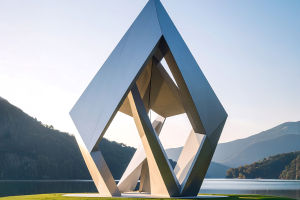
In a world saturated with visual stimuli, the concept of minimalism in art stands as a bold statement—sometimes less really is more.
Minimalism, characterized by its simplicity, clean lines, and reduction of unnecessary elements, has become a significant movement in the art world.
Though its roots go back to the 1950s, its influence continues to grow, affecting not only how art is created but also how it is experienced. By stripping away extraneous details and focusing on the essentials, minimalism brings clarity and focus to the viewer, offering an entirely new way of engaging with art. This article delves into the power of minimalism, exploring how it has shaped contemporary art and its profound impact on both artists and audiences.
Defining Minimalism in Art
Minimalism, as the name suggests, emphasizes simplicity and the elimination of excess. In visual arts, it is often marked by sparse compositions, limited color palettes, geometric shapes, and an emphasis on form and space.
Minimalist artists strive to create works that focus on the most essential aspects of their medium, whether through sculptures, paintings, or installations.
• Less Is More: Minimalism challenges the traditional notion that art must be complex to be powerful. By removing clutter and focusing on basic elements, such as lines, colors, and shapes, minimalist artists allow the viewer to engage with the work in a more direct and personal way. A minimalist painting, for example, may use only a few colors, yet evoke a powerful emotional response due to its clarity and balance.
• Origins and Evolution: The minimalist movement grew as a reaction against the extravagance and complexity of Abstract Expressionism and the emotional depth seen in earlier art movements. Artists such as Donald Judd, Frank Stella, and Dan Flavin played pivotal roles in defining this movement, shifting the focus away from detailed, expressive brushstrokes to pure, unadorned form.
Minimalism was, and still is, a statement against the overabundance of sensory overload, offering an alternative way to approach both creation and viewing.
The Emotional Impact of Simplicity
At first glance, minimalist art can seem stark or unemotional. However, its simplicity allows for a deeper, more introspective engagement. By removing the distractions of excess detail, minimalist works encourage the viewer to focus on the essence of the piece and its emotional undertones.
Minimalism invites reflection, creating space for the viewer to bring their own interpretation and emotional response.
• Focused Attention: Minimalist art encourages viewers to engage with the piece on a different level. With fewer elements to distract the eye, every detail within the composition carries greater weight. For example, a large, empty canvas with a single geometric shape can invoke feelings of isolation or quietude, while a carefully placed color gradient can create a sense of calm or serenity.
The artist's deliberate restraint allows the viewer to fill in the gaps, making the experience more personal and emotionally resonant.
• The Power of Space: One of the key elements of minimalist art is its use of negative space, the areas of the composition left empty. This "space" is not just a void but an integral part of the work itself, offering a sense of balance and allowing the viewer to appreciate the relationship between the elements that are present.
Space can be used to evoke a range of emotions, from peace and stillness to tension and anticipation, depending on how it is balanced with the objects within the artwork.
Minimalism's Influence on Contemporary Art
While minimalism emerged as a distinct movement in the mid-20th century, its influence continues to shape the way contemporary artists approach their work.
The principles of simplicity, clarity, and reduction remain relevant in today's art scene, inspiring new generations of creators to experiment with fewer elements and more intentional designs.
• Art in Everyday Life: In the digital age, the influence of minimalism extends beyond traditional art galleries and museums. Minimalist design principles have permeated various fields, from architecture and fashion to graphic design and advertising. Brands now use minimalist logos and simple, clean designs to convey clarity and sophistication.
The aesthetic appeal of minimalism has become a universal language, resonating with a wide audience across multiple industries.
• Interactive Minimalism: Contemporary artists have expanded on the minimalist tradition, incorporating new media and technology to engage audiences in innovative ways. Interactive installations, often featuring simple forms and clean designs, encourage viewers to participate in the creation of the artwork.
By removing the boundaries between the art and the viewer, artists create an experience that is both personal and collective, enhancing the impact of minimalism in the digital era.
The Philosophical Underpinnings of Minimalism
Beyond its aesthetic appeal, minimalism carries a philosophical message. At its core, minimalism is about focusing on what truly matters, stripping away the unnecessary to reveal the essence of life, art, and creativity. It's a reflection of the human desire for simplicity in an increasingly complex world.
• The Pursuit of Clarity: Minimalism often aligns with the philosophical belief in the importance of clarity and focus. By reducing the clutter, both in art and in life, individuals can find deeper meaning and connection. This minimalist approach can be seen as a metaphor for the human condition—the search for truth, balance, and purity in a world filled with distractions.
Artists who embrace minimalism are not simply creating works of art; they are challenging society to reconsider its priorities and embrace simplicity as a path to deeper understanding.
• Cultural Relevance: In the context of contemporary culture, minimalism offers a counterbalance to the overwhelming noise and constant stimulation of modern life. The rise of digital media, consumerism, and information overload has created a society that often feels cluttered and fragmented.
Minimalist art, with its focus on essentials, serves as a reminder to slow down, to appreciate the present moment, and to find meaning in simplicity.
Conclusion: The Enduring Power of Minimalism
The power of minimalism in art lies in its ability to evoke deep emotions and provoke introspection through the simplest of means. By reducing the elements of a composition to their core, minimalist artists create works that are both timeless and deeply personal.
As the art world continues to evolve, the minimalist movement remains a potent force, offering a fresh perspective on creativity, expression, and the human experience. In a world that often feels cluttered, the art of minimalism reminds us of the beauty in simplicity, allowing us to rediscover the profound impact of the most basic forms of art.