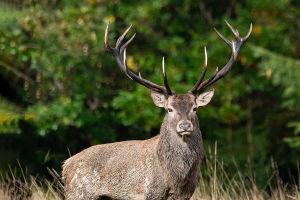
Imagine walking through a forest and spotting a moose with its antlers stretching wider than most trees around it.
Those enormous structures aren't just for show—they're an essential part of the moose's life, affecting everything from survival to social standing.
Understanding why moose grow such massive antlers reveals a fascinating blend of biology, behavior, and nature's strategy.
Antlers as a Sign of Strength
Physical fitness indicator, Age reflection, Health status
Moose antlers grow each year and serve as a visible signal of the animal's health and maturity. Large, well-formed antlers indicate a strong and fit male, which helps in attracting mates.
Younger moose may have small, simple antlers, while mature males develop broad, multi-branched structures.
Nutrition plays a huge role—moose with access to protein-rich plants grow larger antlers.
Predators and rivals often gauge size and symmetry to decide whether to challenge a moose.
Actionable example: Wildlife observers can estimate a moose's age and health simply by noting antler spread and branching.
Role in Mating and Competition
Mate attraction, Dominance battles, Ritualized displays
Antlers are crucial during the breeding season. Male moose, or bulls, use their antlers to compete for the attention of females.
During rutting season, bulls clash antlers to establish dominance without serious injury.
Large, symmetrical antlers signal strength and deter smaller competitors.
Bulls also display antlers in visual posturing, swaying or lowering their heads to impress nearby females.
Tip: In wildlife documentaries, you'll notice that the bull with the biggest antlers often controls the prime mating territory.
Antlers and Protection
Defense against predators, Safe spacing in groups, Territorial signaling
While not their primary function, antlers can offer some protection. They act as deterrents to predators and help maintain space among other moose.
A wolf may think twice before attacking a bull with massive antlers.
Antlers can be used to push rivals or defend access to feeding grounds.
The spread of antlers helps bulls signal territory, reducing unnecessary fights.
Actionable example: Observing antler interactions at feeding spots can reveal social hierarchies within moose populations.
Energy Investment and Growth Cycle
Rapid yearly growth, Shedding in winter, Regrowth in spring
Growing large antlers requires significant energy, which is why moose only grow them annually. This process is closely tied to the animal's health and environment.
Antler growth starts in spring and can reach full size by late summer.
Velvet, a soft tissue covering, supplies blood and nutrients during growth.
By winter, antlers are shed, conserving energy for survival during harsh conditions.
Tip: A bull with exceptionally large antlers has likely had access to optimal food sources all year, showing the direct link between diet and antler development.
Antlers as Evolutionary Strategy
Mating selection, Genetic fitness display, Species signaling
Over time, natural selection favored moose with larger, more impressive antlers because they attract mates and assert dominance efficiently.
Females often choose mates based on antler size, which passes strong genetic traits to offspring.
Antlers also function as a species-specific signal, helping bulls recognize rivals and prevent unnecessary fights.
The yearly regrowth allows adaptation—antler size can respond to changing environmental conditions and nutrition.
Actionable example: Conservationists track antler size trends over years to study habitat quality and population health.
Moose antlers are more than just striking natural decorations—they reflect health, social hierarchy, survival strategy, and evolutionary success. Their massive size is a result of biology, environmental factors, and the pressures of reproduction and competition. Next time you see a bull moose in the wild, take a moment to appreciate the story behind those impressive antlers—they're a living testament to nature's balance of power, survival, and display.