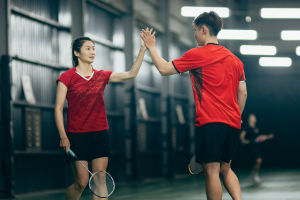
Badminton is often associated with speed, precision, and graceful movement, yet the physical demands of the sport are far greater than they appear. Every rally requires quick side shuffles, explosive lunges, sudden stops, and rapid recovery steps.
Because so much of badminton is played through lateral movement, the ability of a shoe to keep the foot stable from side to side becomes one of the most important factors in both performance and comfort.
Players usually focus on grip, cushioning, fit, and weight when buying badminton shoes. All of these features matter, but lateral support deserves special attention because it directly affects balance, movement efficiency, and confidence during play. A shoe that holds the foot securely during fast directional changes allows players to move more naturally and react more quickly on court.
Why Lateral Support Is So Important
Unlike running, badminton is not a straight-line sport. Players constantly move left and right, step into wide lunges, and push off aggressively to recover for the next shot. During these movements, the foot experiences force not only from above but also from the side.
If the upper structure and sidewall of the shoe do not provide enough support, the foot may shift inside the shoe during a quick cut or reach. This can make movement feel less stable and less efficient. Good lateral support helps keep the foot aligned over the sole, improves balance, and allows energy to transfer more effectively into the next movement.
Built for Court Movement
Badminton shoes are designed specifically for indoor court sports, where stability is a priority. Running shoes are optimized mainly for forward motion, while badminton shoes are built for repeated multi-directional movement.
Most rallies involve split steps, short explosive pushes, and rapid changes of direction. Because of this, badminton shoes typically include reinforced side structures, a stable midsole, and a wider, more secure base. These design features help players stay balanced during fast exchanges and quick recoveries.
How Shoes Create Better Stability
Lateral support is usually the result of several design elements working together. Stronger materials along the sides of the upper help hold the foot in place during sideways movement. A firm and stable midsole reduces excessive movement, while a well-shaped outsole provides a solid platform for pushing off and landing.
Many badminton shoes also sit lower to the ground than heavily cushioned training shoes. This lower profile improves court feel and balance, allowing players to react more quickly during fast rallies.
Fit Matters as Much as Support
Even the most advanced shoe cannot perform well if the fit is incorrect. A secure fit around the midfoot and heel allows the shoe’s support structure to work properly. When the foot moves too much inside the shoe, stability is reduced and the benefits of the side reinforcement are lost.
When trying on badminton shoes, the foot should feel snug but not cramped. The heel should stay secure during movement, and the midfoot should feel supported without excessive pressure.
The Effect on Performance
Strong lateral support does more than improve comfort. It can make movement feel quicker and more controlled. Players are often able to push off with greater confidence, recover faster after a lunge, and maintain better balance during rapid exchanges.
Over a long session, stable footwear can also make movement feel less tiring because the body does not need to compensate for unnecessary foot movement inside the shoe.
What to Look for When Buying
When choosing badminton shoes, focus on three key areas:
- A secure fit around the heel and midfoot
- Reinforced side support for lateral stability
- A non-marking outsole designed for indoor courts
Cushioning is important, but it should not come at the expense of stability. Soft cushioning alone cannot provide the control needed for fast side-to-side movement.
Players who enjoy fast doubles may benefit from shoes with stronger lateral support for rapid exchanges, while singles players should look for a balance of stability, comfort, and reliable support during frequent lunges and full-court coverage.
Lateral support is one of the most important features of a badminton shoe because it influences balance, control, and movement efficiency throughout every rally. A shoe that keeps the foot stable during side-to-side motion allows players to move with greater confidence, react more quickly, and feel more secure on court.
When selecting your next pair of badminton shoes, do not focus only on grip or cushioning. Pay close attention to how well the shoe supports your foot during lateral movement. The right combination of fit, stability, and court-specific design can make your movement feel smoother, quicker, and more controlled from the first rally to the last.