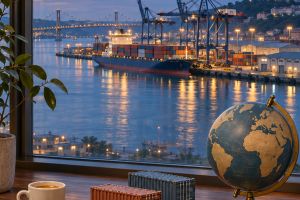
Seaports are much more than locations where ships load and unload cargo. They connect businesses with international markets, support employment, provide access to essential goods, and influence the development of coastal communities.
More than 80% of global trade by volume is transported by sea, making port performance an important factor in economic activity. However, their contribution extends beyond commercial operations. Modern ports also have responsibilities involving environmental protection, infrastructure resilience, public health, and employment opportunities.
Ports Connect Businesses With Global Markets
Seaports form an essential link between producers, manufacturers, shipping companies, and consumers. Their efficiency influences how quickly goods move through international supply chains and how much businesses pay for transportation and logistics.
When port operations run smoothly, cargo can be processed, stored, and transferred more efficiently. This helps businesses manage inventory, maintain production schedules, and serve customers without unnecessary delays. Efficient ports can support exports, attract commercial investment, and create opportunities for industries that depend on imported materials or international distribution.
Reliable Ports Support Essential Supply Chains
Ports also play an important role in maintaining access to essential supplies. Food, drinking water, medical products, and energy resources often depend on maritime transportation before reaching local distribution networks. When natural disasters or other major disruptions affect communities, functioning ports can provide an important entry point for emergency supplies and equipment.
Their ability to receive vessels, handle cargo, and coordinate onward transportation can influence how quickly essential products reach affected areas. This makes infrastructure reliability an important part of port planning.
Reducing Environmental Damage From Port Operations
Although ports support economic development, their activities can create environmental pressures. Ships, cargo-handling machinery, trucks, trains, and energy facilities consume fuel and generate emissions. Air pollution from maritime and land-based transportation can contribute to respiratory and cardiovascular problems.
Reducing these impacts requires improvements throughout the transportation process. Cleaner energy sources, more efficient equipment, better cargo-handling systems, and improved connections between maritime and land transportation can help reduce unnecessary emissions.
Shore-side electricity is another potential improvement. It allows vessels to connect to electricity while docked instead of relying entirely on onboard engines for power, provided suitable infrastructure and cleaner electricity supplies are available. Environmental management should also include wastewater treatment, responsible waste handling, pollution monitoring, and protection of nearby coastal habitats.
Resilient Infrastructure Protects Long-Term Port Operations
Port infrastructure is designed to operate over long periods, making careful planning essential. Coastal locations expose terminals, storage facilities, and transportation connections to environmental conditions such as flooding, rising sea levels, coastal erosion, and severe weather.
Damage to one important facility can interrupt cargo movement and create delays throughout connected supply chains. Recovery can also be expensive, particularly when essential equipment or access routes require extensive repairs. Climate resilience should therefore be incorporated into infrastructure development. Flood-resistant construction, improved drainage, stronger coastal protection, and suitable emergency procedures can help reduce operational disruption.
Port Development Creates Employment Opportunities
Seaports support employment through a broad range of activities. Cargo handling, shipping services, warehousing, maintenance, transportation, administration, and logistics management all depend on skilled workers. Their economic influence also extends beyond port boundaries. Businesses providing equipment, repairs, storage, transportation, and professional services can benefit from increased maritime activity.
Improving Port Management Through Training and Cooperation
Sustainable port development requires coordination between port authorities, shipping companies, businesses, service providers, and local communities. Decisions involving infrastructure, environmental standards, and operational efficiency often affect several groups simultaneously.
Performance monitoring can help port managers identify areas requiring improvement. Indicators related to cargo handling, vessel turnaround, energy consumption, emissions, and workforce development provide useful information for evaluating progress. Professional training also contributes to better management. The United Nations Trade and Development programme known as TrainForTrade has certified more than 6,700 port managers across 140 countries through its port management programme.
Expert Insight
Rebeca Grynspan, Secretary-General of the United Nations Conference on Trade and Development, emphasized the importance of dependable transportation networks: “Our livelihoods – food, jobs, energy – depend on functioning and resilient supply chains.”
Seaports are essential to sustainable development because they connect international markets, support employment, maintain access to essential supplies, and contribute to regional economic activity. The long-term value of maritime infrastructure depends not only on how much cargo it handles but also on how effectively it supports businesses, communities, and the surrounding environment.